

Slow Steam Downloads? Here is How to Fix Them in 2026
Waiting for a Steam game to download can test anyone’s patience. You just bought the latest AAA title, cleared your evening for it, and now Steam is crawling at single-digit megabytes per second. The good news is that a slow download speed is almost always fixable without upgrading your internet plan.
While your internet speed is one factor, there are many other reasons Steam downloads can stall. This guide covers six proven methods to speed up Steam downloads, from simple settings tweaks to network optimizations that work in 2026.
1. Remove Steam Download Bandwidth Limits
If your downloads feel capped, Steam’s built-in bandwidth limiter might be the culprit. By default this is set to “No Limit,” but if you or someone using your PC enabled a limit, Steam will only use a fraction of your connection.
To check: open Steam, click Steam > Settings > Downloads. Under Download Restrictions, make sure Limit bandwidth to is set to No Limit. Click OK and restart Steam to apply the change.

2. Clear the Download Cache
A corrupted or bloated download cache can cause Steam to slow down or behave unpredictably. Clearing it forces Steam to rebuild its cache files from scratch, often restoring normal download speeds.
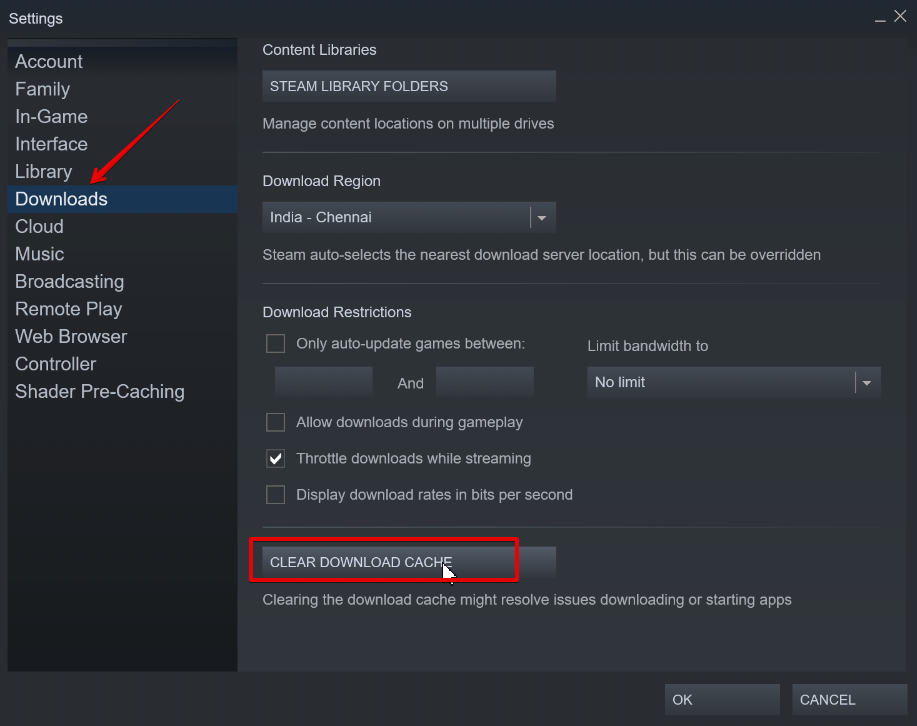
Go to Steam > Settings > Downloads and click Clear Download Cache. Click OK when prompted. Steam will restart and you will need to log in again. This does not delete your installed games, only temporary download data.
3. Change Your Download Region
Steam routes your downloads through regional content servers. If your assigned region is overloaded or far from your location, speeds can suffer. Switching to a nearby region often helps.
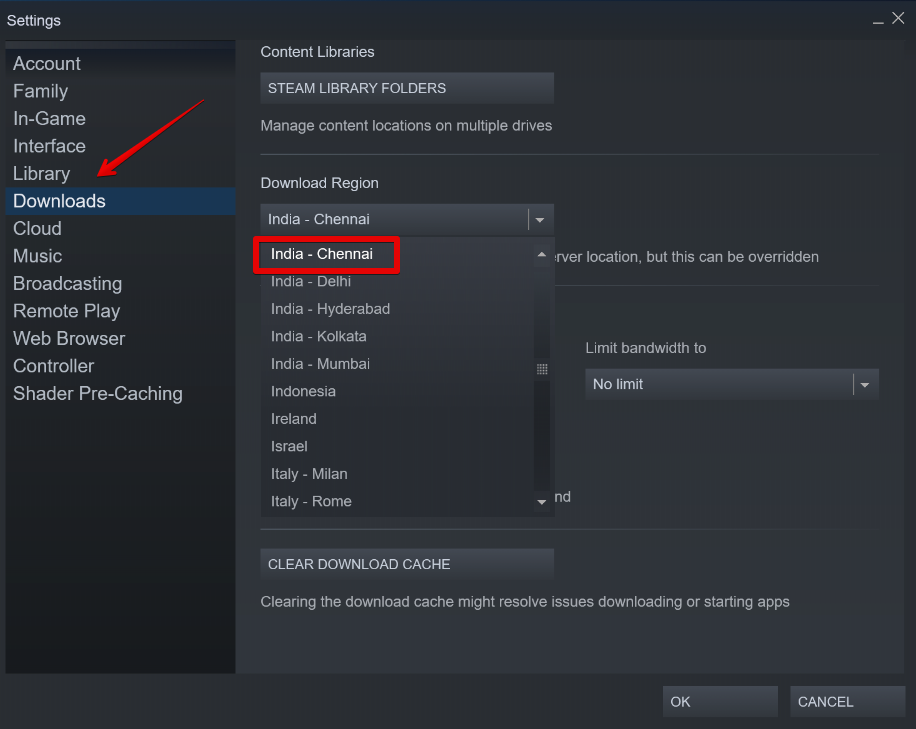
Go to Steam > Settings > Downloads. Under Download Region, try a neighboring region or a less congested one (for example, if you are in the US East, try US Central or US West). Click OK, restart Steam, and test your download speed again.
4. Switch to a Wired Connection
Wi-Fi is convenient, but it is rarely as fast or stable as a wired Ethernet connection. Walls, interference from other devices, and distance from the router can all throttle your speed. If you game on Wi-Fi and your downloads are slow, plugging in an Ethernet cable is the single most effective hardware fix you can make.
A direct wired connection can double your download speed and eliminate packet loss. For gaming optimization tips on Windows 10, including network tweaks, check our full guide.
5. Close Bandwidth-Heavy Applications
Slow Steam downloads are rarely caused by Steam itself. More often, other applications are eating your bandwidth. Streaming services (Netflix, YouTube), torrent clients, cloud sync tools (Dropbox, Google Drive), and Windows Update can all consume significant bandwidth in the background.
Open Task Manager (Ctrl+Shift+Esc) and check the Network column. Close any non-essential applications that are using high bandwidth. You can also pause Windows Updates temporarily while Steam downloads finish.
6. Disable Your VPN
VPNs add encryption overhead and route your traffic through remote servers, which can dramatically reduce download speeds. If you use a VPN for privacy or to access region-locked content, try disabling it while downloading from Steam. You can always re-enable it once the download is complete.
If you need a VPN for other tasks, look for split-tunneling features that let you exclude Steam traffic from the VPN tunnel. Many modern VPN clients support this.
Bonus: Optimize Your PC for Gaming
Beyond download speeds, keeping your PC in top shape helps with overall gaming performance. Check out our guides on lowering GPU temperatures and fixing common issues like the CPU fan error to get the most out of your gaming rig.
Final Thoughts
Slow Steam downloads are frustrating, but they are rarely permanent. Start with the simple fixes: check your bandwidth limits, clear the cache, and switch download regions. If those do not help, move on to network-level changes like Ethernet and closing background apps. In most cases, one of these six steps will get you back to gaming quickly.
For more tips on improving your PC’s performance and internet speed, browse the MeshPie library of gaming and tech guides.